CONTEXT
Mobility is a significant part of daily life which impacts multiple health and quality of life outcomes, particularly for children and young people (CYP). The design of Inclusive Paediatric Mobility (IPM) interventions such as wheelchairs, walking aids and exoskeletons for CYP with mobility disabilities plays a crucial role in facilitating their mobility, and thus the design of such products carries the potential and responsibility to raise standards of living, improve childhood experiences, and ultimately optimise life trajectories.
Despite this, there are a multitude of unresolved issues surrounding the design of IPM interventions, from their functionality and viability to their desirability and acceptability, which are often reflected in the lived experiences of CYP, or act as barriers for incorporating IPM into their lives. While there have been notable contributions to the development and implementation of specific interventions, the field of IPM design as a whole, is characterised by a lack of cohesion and a fragmented knowledge base, scattered and siloed across disciplines. Past research has not specifically explored ‘designerly ways’ relating to IPM design and there is thus a lack of a holistic understanding around what and how transitions need to happen in order to address various issues rooted in design.
This research is conducted in collaboration with Alder Hey Children’s Hospital and The Hugh Greenwood Legacy for Children’s Health Research.
RESEARCH OUTLINE
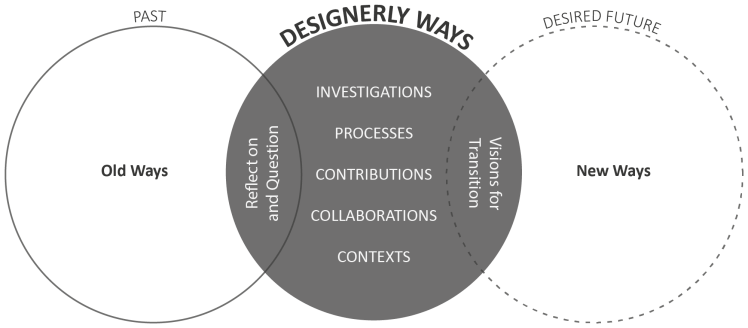
This research starts by undertaking an analytical and reflective process to identify issues and opportunities around the way design has been conducted in the field of IPM over the past 50 years. A ‘Reflection for Transition’ conceptual framework (Figure 1) is developed and transitions are proposed across five dimensions of design to achieve a more desirable future state for the field.
The lens of Children’s Rights is subsequently applied to prioritise two key areas within IPM design; (1) child-centred collaborations focused on ‘voice’ and (2) child-centred investigations focused on ‘narratives’.
Focusing on elevating children’s voice, an interdisciplinary analytical framework is developed (Figure 2) and used to analyse 130 young wheelchair users’ own ‘dream wheelchair’ designs, and findings provide insights into children’s individual and collective values and requirements.
Focusing on advancing the role of narratives in design, a conceptual framework (Figure 3) and matrix (Figure 4) are developed to capture and incorporate a diversity of narratives into a design process. This is then utilised for the first time, to analyse and categorise the mobility narratives of nine young wheelchair users to offer insights into their lived experiences.
The final study in this research incorporates a real-world IPM design project and applies the narrative conceptual framework to map the potential roles and applications of mobility narratives from a multidisciplinary stakeholder perspective (Figure 5).


RELATED PUBLICATIONS
 Child-centred Framing Through Design Research: A Framework For Analysing Children’s ‘Dream Wheelchair’ Designs to Elicit Meaning and Elevate Their Voice (Preprint, 2021).What Can Be Learnt From 130 Children’s Dream Wheelchair Designs? Eliciting Child-centred Insights Using an Interdisciplinary Design Analysis Framework (ICED’21 Conference, 2021).Design as an Agent of Children’s Rights? Inclusive Mobility Design for Children with Disabilities (Routledge International Handbook on Children’s Rights and Disability, 2021).Design as an Agent of Children’s Rights? Inclusive Mobility Design for Children with Disabilities (Preprint, Routledge International Handbook on Children’s Rights and Disability, Book chapter, 2021).What Could We Learn from Disabled Children’s Dream Wheelchair Designs? A Case for Facilitating Interdisciplinary Collaboration to Elicit Children’s Voices and Optimise Their Engagement in Design (Preprint, 2021).A Reflection-for-transition Framework for Questioning Our Designerly Ways; Insights from Mapping 50 Years of Design for Inclusive Childhood Mobility (The Design Journal, Preprint, 2021).50 Years of Inclusive Design for Childhood Mobility; Insights from an Illustrative Mapping Review (Design Research Society International Conference, DRS 2020).Drivers for Change; Initial Insights from Mapping Half a Century of Inclusive Paediatric Mobility Design (Advances in Usability, User Experience, Wearable and Assistive Technology; Book chapter, 2020).
For further information about this project, please contact Cara Shaw
 The Inclusionaries Lab